Tree ferns are some of the most striking plants you can grow. Their tall, textured trunks and elegant arching fronds bring a calm, almost prehistoric beauty to a garden. Whether you’ve got one standing proud in a shady corner or several grouped for a tropical feel, it’s easy to become quite attached to them.
But what happens when you need to move one? Maybe you’re redesigning your garden, building a new patio, or simply realised your fern has outgrown its spot. The good news is that tree ferns can be moved successfully — as long as you do it carefully, at the right time, and with plenty of moisture and patience.
Here’s everything you need to know about moving a tree fern without causing it stress or damage, so it can continue to thrive in its new home.
Understanding Tree Ferns
Tree ferns look like palms or small trees, but they’re actually quite different. What appears to be a trunk isn’t wood at all — it’s a dense, fibrous column made up of old roots and bases of fronds. This means the plant stores moisture throughout its stem, and that’s what keeps it alive and hydrated.
The most common type of tree fern you’ll find in British gardens is Dicksonia antarctica, a species native to Tasmania and parts of Australia. It’s popular because it’s hardy, elegant, and surprisingly resilient when cared for properly.
Unlike typical garden plants, the roots of a tree fern aren’t deep or wide — they grow mainly near the base of the trunk. That’s why keeping the trunk damp and the roots protected is so important when moving them. The crown at the top (where new fronds unfurl) is particularly delicate, and if that’s damaged or allowed to dry out, the fern may not recover.
When Is the Best Time to Move a Tree Fern?
Timing is everything when it comes to moving a tree fern. The ideal time is between late autumn and early spring, when the plant is dormant and not producing new fronds.
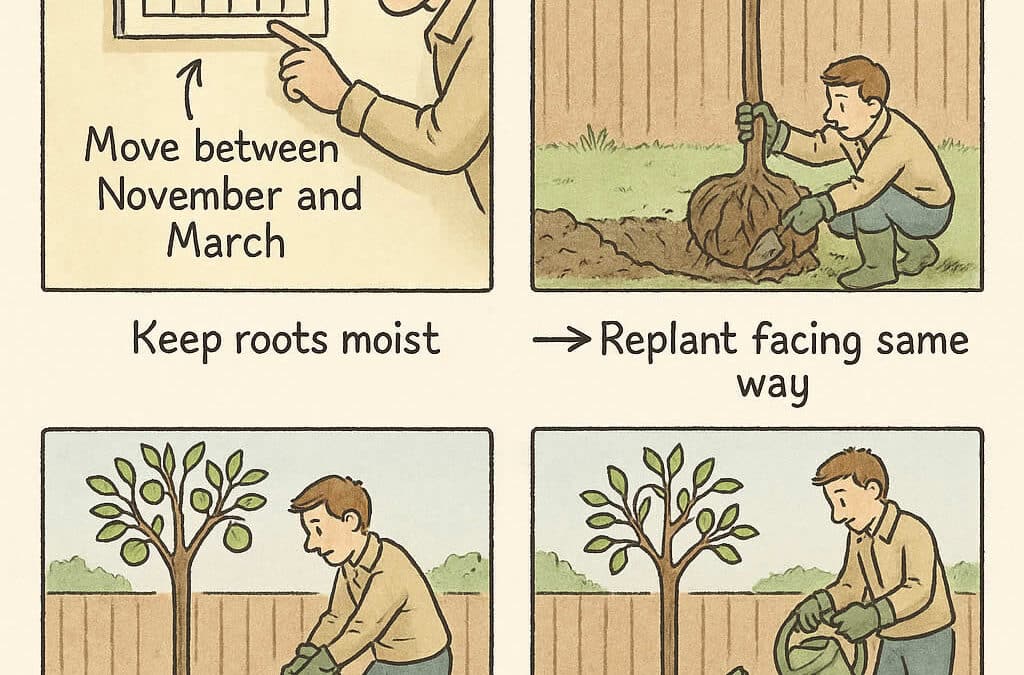
Moving it during dormancy means the fern isn’t actively drawing up as much water, so it can handle root disturbance better. It also gives the plant time to settle before the growing season begins. In the UK, November to March is usually the safest window — just avoid freezing or waterlogged soil.
If you absolutely must move a tree fern in summer, it can be done, but you’ll need to be extra careful. Keep it shaded, water the trunk daily, and make sure the crown never dries out. Warm weather speeds up moisture loss, and since the trunk acts as a reservoir, dehydration is the biggest risk.
If you’re in a particularly cold region, it’s best to move it in early autumn, giving the roots a few months to anchor before winter sets in.
Preparing Your Tree Fern Before Moving
A few days of preparation will make your job much easier and give your fern the best chance of survival.
Start by giving the trunk and root area a deep soak for several days leading up to the move. You want the fibres inside the trunk to be fully hydrated — they’ll act like a sponge, holding moisture while the plant is out of the ground.
Next, tie the fronds loosely together with soft twine or string. This helps protect them during handling and keeps them out of your way when lifting. If the fronds are damaged or brown, it’s fine to trim them off — the plant will produce new ones once it’s settled again.
Now prepare the new location. Tree ferns prefer a shaded or semi-shaded spot, ideally protected from strong wind. The soil should be rich, well-drained, and consistently damp. Dig a hole slightly wider and deeper than the base of the fern, and mix in compost, leaf mould, or bark chips to improve structure.
Having the hole ready before lifting the fern is crucial — the less time the plant spends out of the ground, the better.
How to Move a Tree Fern Safely
When you’re ready to start, work slowly and carefully.
Use a sharp spade to dig a wide circle around the base of the trunk, taking care not to slice into the fibrous roots. The aim is to lift the entire rootball with as much soil attached as possible. You don’t need a massive rootball — most of the important roots are near the surface.
Once you’ve freed the base, gently rock the trunk back and forth to loosen it from the ground. Smaller ferns can often be lifted by hand, but larger specimens might need two people. If the trunk is over 1.5 metres tall, it can be surprisingly heavy, especially when damp.
If you’re moving it a short distance, carry it carefully on a piece of hessian or tarp to avoid snapping the roots. For longer moves, wrap the base in damp cloth or sphagnum moss and secure it loosely — keeping the roots moist is vital.
When you lower it into the new hole, make sure the trunk sits at the same level it was before. Planting it too deep can cause rot, while too shallow can leave the roots exposed.
Backfill with soil and compost, firming it gently with your hands rather than stomping it down. The goal is to keep the soil close to the roots without compacting it. Then, water deeply to help settle the soil and remove air pockets.
How to Replant and Settle a Tree Fern
Once replanted, give your fern a good drink — and not just at the base. Water the trunk and the crown too. This mimics rainfall in its natural habitat and helps keep the internal fibres moist.
Add a thick layer of mulch around the base to lock in moisture and protect the roots from temperature swings. Bark chips, compost, or leaf mould all work well.
If the weather’s warm or sunny, use shade cloth or position a large plant nearby to protect it for the first few weeks. You can also mist the trunk daily to stop it drying out.
In very exposed gardens, a stake may help stabilise tall ferns until the roots re-anchor. Tie the trunk loosely so it doesn’t rub or bruise.
Caring for a Tree Fern After Moving
Tree ferns need plenty of attention in the months after moving. Regular watering is the most important part of aftercare. Aim to keep both the soil and the trunk consistently damp — never let it dry out completely.
During spring and summer, water from above so moisture soaks into the crown and trickles down through the fibres. In cooler months, you can water less often, but still keep the trunk from drying.
Avoid using fertiliser straight away. The roots will be delicate and need time to re-establish before feeding. Once you see new fronds emerging, you can start using a liquid seaweed feed or a diluted fern fertiliser every few weeks.
If frost is forecast after the move, protect the crown with a loose bundle of straw or fleece. This keeps the growing point safe from cold damage.
With steady watering, shade, and patience, you’ll usually see new fronds begin to unfurl the following spring — a sure sign your tree fern has settled in and is back to full health.
Moving Larger or Mature Tree Ferns
Bigger tree ferns can look intimidating to move, but the process is much the same — it just takes more care and manpower.
For tall ferns with thick trunks, it’s often easier to move them “bare-trunked”, meaning without the surrounding soil. Their roots are shallow and regrow readily once planted again. Just make sure the trunk never dries out.
Wrap it in damp cloth, moss, or even cling film while transporting, and keep the crown upright. If you’re moving several ferns, stack them gently and spray them with water periodically.
When replanting, water from the top daily for several weeks. This keeps the fibres moist until new roots form. You might not see fronds straight away, but don’t lose hope — some take a full growing season to recover.
In colder parts of the UK, some gardeners temporarily lift tree ferns into sheltered greenhouses or garages over winter. It’s a bit of effort, but it can prevent frost damage and dehydration during freezing months.
Common Mistakes to Avoid When Moving Tree Ferns
It’s easy to underestimate how sensitive tree ferns can be to moisture loss. Here are a few mistakes worth avoiding:
- Letting the trunk or roots dry out — the biggest reason ferns fail after moving.
- Moving in hot or windy weather without extra shade or misting.
- Planting too deep and covering the crown, which can lead to rot.
- Using dry or sandy soil with poor water retention.
- Skipping aftercare — regular watering and crown protection are non-negotiable.
If you avoid these mistakes and focus on moisture, your tree fern will almost always bounce back.
How to Tell if Your Tree Fern Has Recovered
The clearest sign that your tree fern has recovered is the appearance of new fronds. These start as tight coils in the crown — known as croziers — and gradually unfurl through spring and early summer.
You’ll also notice the trunk feeling firm and damp when pressed. A dry, hollow, or brittle trunk suggests it’s not getting enough water.
Don’t panic if recovery seems slow. Some ferns take months to adjust after moving, especially in cooler climates. Keep up the watering routine and stay patient. Once it regains strength, it’ll reward you with lush, green growth for years to come.
Our Final Thoughts
Moving a tree fern takes care and timing, but it’s far from impossible. These ancient plants are surprisingly tough when treated properly. The key is moisture — keeping the roots, trunk, and crown damp before, during, and after the move.
By planning ahead, preparing the new site, and replanting at the same depth, you’ll give your fern the best chance of thriving in its new position. Don’t rush the process, and remember that recovery can take time.
Once settled, your tree fern will carry on as if nothing happened, its fronds unfurling gracefully through the seasons and bringing that same peaceful, tropical atmosphere to your garden — just in a new spot.
Tree Surgeon Compton – Tree Thinning Wolverhampton – Tree Surgeon Badger