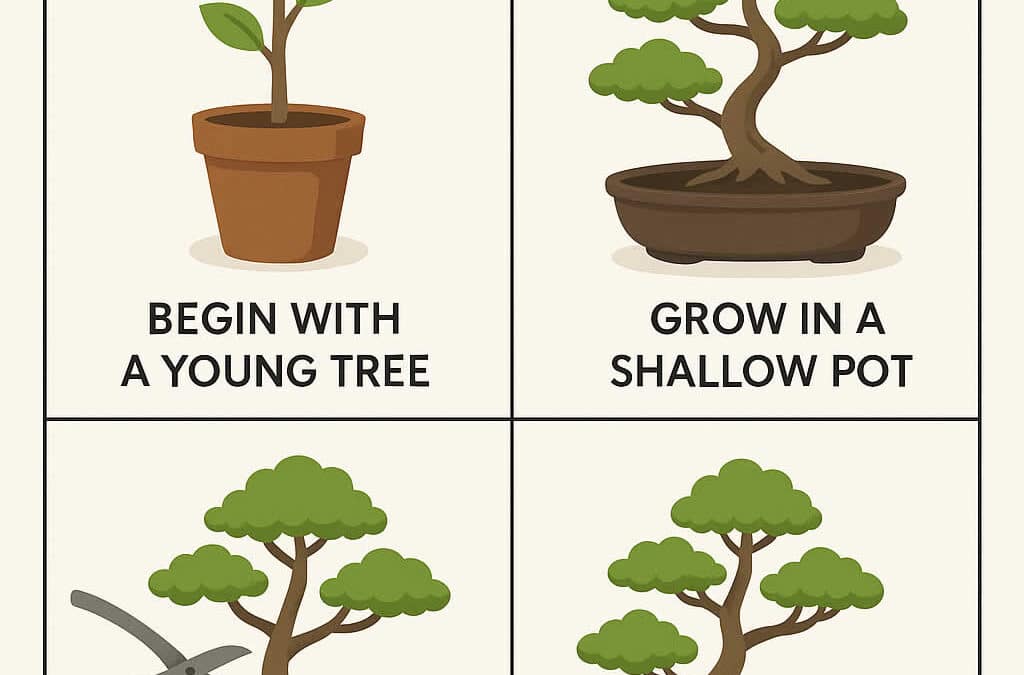
Pruning is the thing that actually turns a small tree in a pot into a bonsai. Wiring, nice pots and moss all help, but pruning is what keeps the tree compact, balanced and believable. Bonsai Empire explain it really clearly: you do light, regular pruning to keep the shape, and then you do the heavier, structural stuff only once in a while.
Why Bonsai Need Pruning
A bonsai won’t stay in shape on its own. Trees naturally push growth to the top and outer tips, because in nature they’re racing for light. If you leave your bonsai, the crown gets strong, the bottom weakens, and the inner twigs can die off. Pruning spreads the energy back inside the tree, keeps the outline neat, and creates that lovely fine ramification everyone wants.
The Two Kinds of Pruning
Maintenance pruning
This is the light, regular trim you do through the growing season to stop shoots getting too long and to pull growth back in. You’re basically telling the tree, “grow here, not out there.” Outdoor trees can have this from spring to autumn; indoor trees can have it most of the year.
Structural (or hard) pruning
This is the big one. You remove thicker, unwanted branches, lower the height, open the canopy, and set the basic style. Because it’s stressful, you do it once a year at most, ideally in spring or sometimes autumn when the tree can recover. And you don’t do major root work at the same time – one heavy job per year.
When to Prune
- Maintenance: during active growth (early spring to late autumn for outdoor bonsai; year-round for indoor, but still watch the tree’s health).
- Structural: spring or autumn, once a year.
- Never prune hard on a weak or newly repotted tree – let it recover first.
Tools You’ll Need
- Sharp bonsai shears or twig scissors for thin shoots
- Concave cutter for thicker branches (it leaves a hollow cut that heals flatter)
- Cut paste or sealing compound to cover bigger wounds
- Disinfectant/clean cloth so you’re not spreading disease between trees
Step-by-Step: Maintenance Pruning
- Look at the overall outline first. Picture the shape you want to keep.
- Find the shoots that have broken that outline – the ones sticking out at the top or sides.
- Cut those back to the next pair of leaves or a bud that’s pointing in the direction you want the branch to grow.
- Work from the top down. Trees push energy upward, so if you only trim the bottom, the top will still run away.
- Don’t remove more than about a third of the foliage on a healthy tree in one go.
Step-by-Step: Structural Pruning
- Start with dead, diseased or crossing branches – those always go.
- Remove branches that grow straight down, straight up, or back into the trunk; they spoil the flow.
- If two branches leave the trunk at the same height, keep the better one, remove the other.
- Create space: sometimes you cut a branch partway first, then go back in with the concave cutter to make a clean cut exactly where you want it.
- Seal the wound with cut paste so it heals faster and doesn’t dry out.
Aftercare: Help the Tree Recover
- Keep it watered properly – consistent moisture, never waterlogged.
- Give it light but avoid baking, direct sun right after a heavy prune, especially on small-leaved species.
- Don’t fertilise heavily immediately after a big structural cut – let it push new growth first.
- Watch for dieback around big cuts; keep the sealant intact.
Common Mistakes to Avoid
- Cutting too much at once.
- Pruning and heavy root work together: do them in different seasons.
- Ignoring lower branches: if you only ever trim the top, the bottom weakens.
- Leaving big, flat wounds unsealed: they heal slower and can look ugly later.
- Chasing perfect too soon: sometimes you have to let a branch grow out to thicken it, then cut – not tidy everything every week.
Linking to Other Bonsai Basics
Pruning is one part of maintenance, but good shaping only works if the tree is healthy and growing steadily. That’s why it’s smart to interlink your pieces. You can drop these in naturally:
- Before you shape, make sure the tree is getting the right moisture – here’s our guide on how often you should water a bonsai tree.
- If you’re doing light trims every month, you’ll like this step-by-step on how to trim a bonsai tree.
Final Thoughts
If you explain pruning as “little and often” (maintenance) plus “once a year, go bigger” (structural), most people get it straight away. That’s exactly the approach most bonsai guides teach: light, regular work to keep the silhouette, and one heavier session to set the style.
Logs for Sale – Tree Surgeon Littlegain – Tree Surgeon Perry Beeches