There comes a time when even the most established apple tree needs a change of scene. Maybe it’s not getting enough light, perhaps it’s too close to a fence, or you’ve redesigned your garden and need to shift things around. Whatever the reason, moving an apple tree takes a bit of planning — but it’s absolutely possible.
The key to success lies in timing and technique. Move it at the wrong time and you risk stressing or killing the tree; do it at the right moment, and it will settle in beautifully, ready to fruit again once it’s regained its strength. If you’re patient and careful, you can bring an apple tree with you wherever your garden plans lead next.
Let’s look at when and how to do it properly, so your apple tree keeps thriving long after the move.
Why You Might Need to Move an Apple Tree
There are plenty of reasons why you might need to transplant an apple tree. Sometimes it’s simply a matter of light — apple trees need at least six hours of direct sunlight each day to produce good fruit. If your tree is shaded by a shed, taller trees or a neighbouring fence, moving it to a sunnier position can make all the difference.
Other times, it’s about space. Apple trees have roots that like to spread, and if they’re cramped against paving, walls or other trees, they’ll struggle to grow properly. Moving one to open soil gives it room to breathe.
You might also need to move a tree because of redesigns or building work. If you’re re-laying a patio, putting up an extension, or changing the shape of your garden, relocating the tree could be the best way to save it. And of course, sometimes it’s sentimental — maybe you planted it years ago and don’t want to leave it behind. Whatever the reason, a successful move is all about knowing when to act.
When Is the Best Time to Move Apple Trees?
Timing is everything. The best time to move apple trees is during their dormant period — usually between late autumn and early spring, when the leaves have fallen and before new buds appear. In the UK, that means roughly November to March.
During dormancy, the tree’s energy is stored in the roots rather than the branches and leaves. This makes it far less vulnerable to shock from being uprooted. If you move it while it’s actively growing (for example, in summer), the sudden loss of roots and moisture can cause stress, leaf drop, and even death.
The soil also plays a role. You want the ground to be workable but not frozen or waterlogged. On mild winter days, when the soil is soft enough to dig, conditions are ideal. Moving a tree in early spring can also work well, as long as it’s before growth starts — the roots can settle into the new soil just in time for the growing season.
If you’re in a region with very harsh winters, aim for late autumn so the roots have a little time to establish before frost sets in. In milder areas, early spring moves can be just as effective. The main rule is simple: avoid extremes — no baking heat, no deep frost.
How to Prepare Before Moving an Apple Tree
Preparation makes a huge difference. A few weeks before the move, start by watering the tree deeply every few days. This keeps the roots hydrated and the soil soft, making it easier to lift later.
Prune lightly to reduce the amount of foliage and balance the root-to-branch ratio. Don’t overdo it — a light tidy-up is enough. Remove dead or crossing branches but avoid major cutting.
Next, mark the tree’s orientation with a bit of tape or chalk. You’ll want to replant it facing the same direction so it adjusts more easily to its new spot. The side that faced south before should face south again — that way, the bark doesn’t get sunburned and the growth pattern stays consistent.
Finally, dig the new hole before you start moving the tree. Make it slightly wider and deeper than the rootball. Loosen the soil at the base and sides, and mix in compost or well-rotted manure to improve drainage and nutrition. Having this ready means the tree spends less time out of the ground, which reduces stress and improves its chances of survival.
How to Move an Apple Tree Safely
Start by digging a wide circle around the tree — roughly the width of its canopy if it’s young, or a bit further out for older specimens. Use a sharp spade to cut cleanly through the soil and roots. The goal is to keep as much of the rootball intact as possible.
Once you’ve loosened the circle, dig under the rootball carefully to lift it free. Depending on the size of the tree, this may take a bit of effort. If it’s large, get a second pair of hands to help. For bigger trees, it can help to undercut the roots at a slight angle to free them gradually.
If you’re moving the tree a short distance, carry it on a piece of hessian or tarp to protect the roots. If you need to transport it further, wrap the rootball securely in damp material to keep it moist. Avoid letting the roots dry out or sit exposed to cold wind for too long.
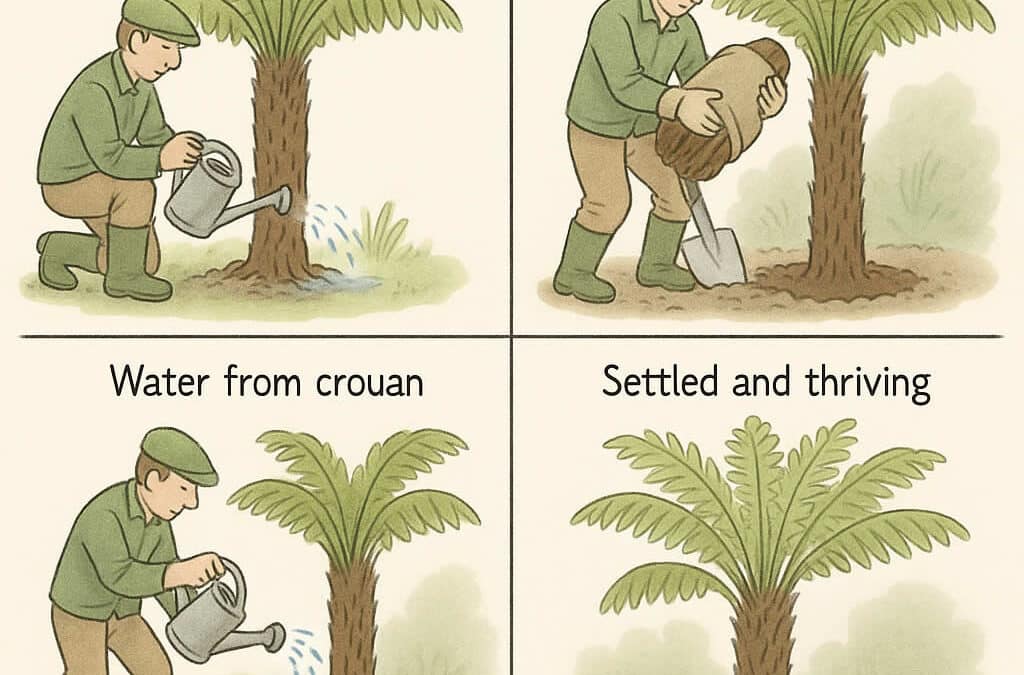
When you place it into the new hole, make sure it sits at the same depth as before — the trunk flare (where the trunk meets the roots) should be level with the soil surface. Backfill with the soil you dug out, mixed with compost if needed, and gently firm it down to remove air pockets.
Water it deeply once planted, then add a layer of mulch around the base to keep moisture in and weeds out. Leave a small gap around the trunk to prevent rot.
Caring for an Apple Tree After Moving
Aftercare is what makes the difference between a tree that struggles and one that thrives. The most important thing you can do after moving an apple tree is to keep it well watered — especially through the first spring and summer. The roots need time to re-establish, and consistent moisture helps them settle in.
Aim for deep, infrequent watering rather than little and often. You want the moisture to reach the lower roots where it’s needed most. During dry spells, a good soak once a week is far better than a daily sprinkle.
Keep the area around the base weed-free so there’s no competition for water and nutrients. Reapply mulch once or twice a year to maintain moisture and regulate soil temperature.
Avoid heavy pruning or feeding straight after the move — let the tree focus on root recovery first. The first season might bring fewer blossoms or smaller fruit, but that’s normal. Once the tree adjusts, it will bounce back stronger than before.
If you spot any drooping leaves, delayed budding, or dieback, don’t panic. These are usually signs of mild transplant shock. Keep watering, resist the urge to fertilise too soon, and the tree will gradually recover.
Common Mistakes to Avoid When Moving Apple Trees
A few common missteps can undo all your hard work. Here’s what to avoid:
- Moving at the wrong time of year. If you move the tree while it’s actively growing, it will lose too much moisture through its leaves before the roots can recover.
- Damaging major roots. Try to lift the rootball intact — severing large roots reduces stability and slows recovery.
- Planting too deep. Burying the trunk base can cause rot and stress. Always replant at the same level it was before.
- Forgetting to water. Even dormant trees need moisture to prevent the roots from drying out.
- Overfeeding too soon. Fertiliser can overwhelm weak roots — wait until the tree shows signs of new growth before feeding.
Avoiding these pitfalls makes the transition much smoother and gives your tree the best possible start in its new home.
Can You Move Older or Mature Apple Trees?
You can, but it’s trickier. Older trees have wider root systems and are less flexible than young ones. The larger and older the tree, the harder it is to lift without damaging roots. That doesn’t mean it’s impossible — just that it takes more preparation and care.
If your apple tree is more than five or six years old, start planning a year ahead. You can root-prune the tree in advance by digging a circular trench about a metre out from the trunk, cutting through some of the outer roots. This encourages the tree to grow new feeder roots closer to the trunk, making the final move less stressful.
When you do move it, expect to prune the canopy lightly to balance out the reduced root mass. Staking the tree afterwards helps stabilise it while new roots establish. Water generously and consistently, as mature trees take longer to settle.
The recovery time can be longer — it might not produce much fruit the first year — but if you’re gentle and patient, it can still thrive in its new spot.
Helping Your Apple Tree Settle In
After moving, your job is to help the tree feel at home again. Keep the soil consistently moist for the first year, especially during dry spells. Mulch around the base with bark chips or composted leaves to keep the roots cool and moist.
If the site is windy, consider staking the tree for extra support. Use soft ties and check them regularly so they don’t dig into the bark. Once the roots are anchored, you can remove the stake.
It also helps to remove any blossom that appears during the first spring after moving. It might seem harsh, but it stops the tree wasting energy on fruiting before the roots are fully re-established. By the following year, it’ll be ready to flower and fruit normally again.
Keep an eye on growth through the first summer. New leaves and shoots are a great sign that the tree is settling in. Don’t rush to feed it — wait until it’s clearly growing before adding a slow-release fertiliser in late spring or early summer.
Our Final Thoughts
Moving an apple tree might sound daunting, but once you understand when and how to do it, it’s far less intimidating. The most important thing is timing — stick to late autumn through early spring when the tree is dormant. Prepare the new site before lifting, handle the roots with care, and give the tree time to adjust afterwards.
Even if you’re working with a mature specimen, patience and consistency will pay off. Water deeply, keep weeds away, and resist overdoing fertiliser or pruning. Within a season or two, your apple tree will be back to its best, producing blossom, fruit and that familiar sense of home in its new spot.
When you’ve invested time growing an apple tree, it’s worth doing everything you can to keep it thriving. Moving it might take effort, but seeing it flourish again is incredibly rewarding.
Tree Surgeon Tong Norton – Tree Surgeon Boningale – Tree Surgeon Broad Oak