Sometimes, you’ve got a tree in the wrong place — maybe it’s blocking light, sitting too close to a wall, or it simply doesn’t fit your garden’s new layout. Instead of cutting it down, you might be able to move it. Moving a tree isn’t just about saving a plant; it’s about keeping something established and giving it a fresh start somewhere better.
It’s not a quick job, though. It takes patience, planning, and care. Trees don’t like sudden changes, and moving one is a bit like performing surgery — you want to keep it alive and healthy during the process. With the right timing and preparation, it can be done safely and successfully. Here’s how to go about it.
Why Move a Tree?
There are plenty of reasons why you might want to move a tree. Maybe it’s grown too close to your house or fence, blocking sunlight or creating root problems. Perhaps you’re redesigning your garden, and you’d rather keep a tree you’ve nurtured for years instead of starting from scratch.
Sometimes, trees simply outgrow their spot. What started as a small sapling can turn into a towering presence, shading out lawns or flower beds. In other cases, the soil or drainage might not suit it anymore, and relocation could give it a better chance of thriving.
Before making any moves, check whether your tree is protected by a Tree Preservation Order (TPO) or if you’re in a conservation area. You’ll need permission before carrying out any major work.
It’s also worth considering whether the tree is healthy enough to survive the move. A weak, diseased, or severely damaged tree might not handle the stress, no matter how careful you are.
When Is the Best Time to Move a Tree?
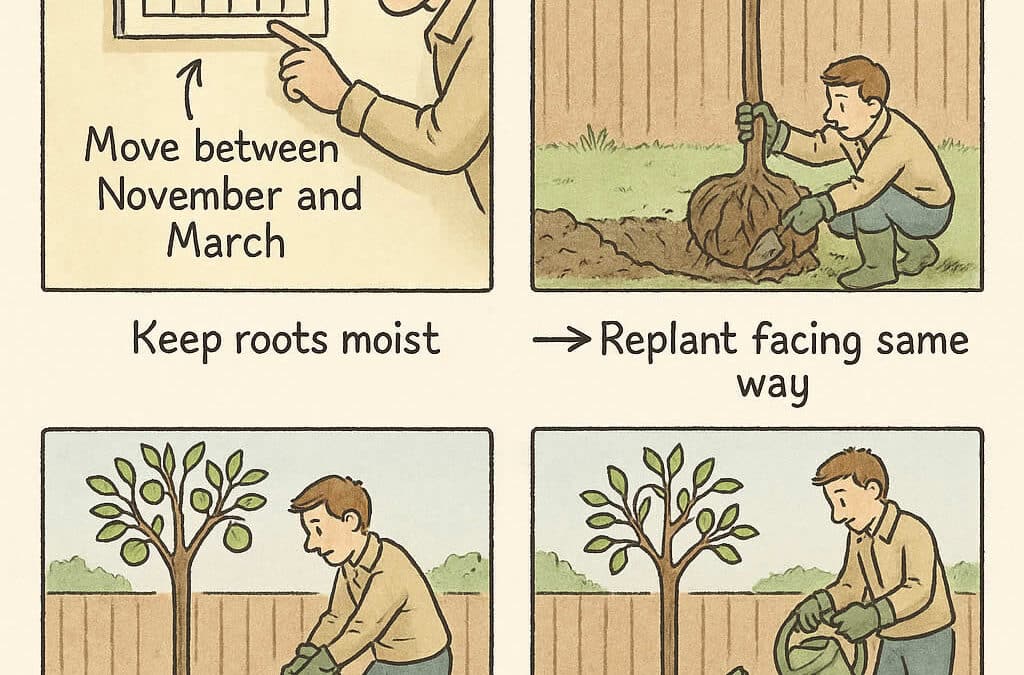
The timing of a tree move can make or break the outcome. The best time to move a tree is when it’s dormant — usually in late autumn or winter. During dormancy, the tree isn’t actively growing, which means less stress and a higher chance of survival.
Avoid moving trees in summer or during dry, hot spells. The heat and evaporation can quickly dehydrate roots. Similarly, avoid frozen or waterlogged ground, as it makes digging difficult and risks damaging the root ball.
Evergreen trees are a bit trickier — they can technically be moved at any time, but winter still offers the best balance between reduced stress and manageable soil conditions. Deciduous trees, on the other hand, should always be moved after they’ve dropped their leaves but before spring growth begins.
A calm, dry day is ideal for the work. Strong winds or heavy rain can make handling large trees risky.
How to Move a Tree — Step by Step
Moving a tree is about planning and care. Whether it’s small enough to lift by hand or large enough to need help, the principles stay the same.
Inspect and Assess
Start by checking the tree’s condition. Look for signs of disease, decay, or damage. If the trunk is cracked, hollow, or covered in fungus, it might not survive the move. Measure the trunk’s diameter — as a rough guide, you can move a tree with a trunk up to 5–7cm thick yourself, but anything larger may need machinery or a professional arborist.
Plan the New Site
Choose a spot where the tree will have room to grow. Consider sunlight, soil type, and drainage. Dig the new hole first — it should be twice as wide as the root ball and about the same depth. This way, the tree can go straight in once it’s out of the ground, reducing root exposure.
Prepare in Advance (Root Pruning)
If you’re planning ahead by several months, lightly prune the tree’s roots before moving it. This encourages new feeder roots to form closer to the trunk, making the final move less traumatic. Root pruning works best in autumn for a winter move.
Dig the Root Ball
Start digging a trench around the tree, roughly one spade length from the trunk for every 2.5cm of trunk diameter. Go wide rather than deep at first, gradually angling inward to create a cone shape. Keep as much soil around the roots as possible — this is your root ball. Try to preserve at least 25–30cm of root ball depth for every 2.5cm of trunk diameter.
Wrap and Support
Once you’ve exposed the root ball, wrap it carefully in hessian or burlap to hold the soil in place. Tie it securely with twine or rope, but not too tight to cut into the roots. For larger trees, you may need a wire basket for extra support.
Lift and Transport
Use a shovel or spade to gently lever the root ball free from the soil beneath. Always lift by the root ball, not the trunk. For small trees, a strong tarp or sack can help you drag it safely. For bigger trees, use lifting straps or slings, keeping the tree upright at all times.
Plant in the New Hole
Lower the tree into the new hole, keeping it at the same depth it was before — the trunk flare (where the trunk widens at the base) should sit just above the soil level. Rotate the tree so it faces the same direction as before; this helps it adjust to sunlight more easily.
Backfill and Water Well
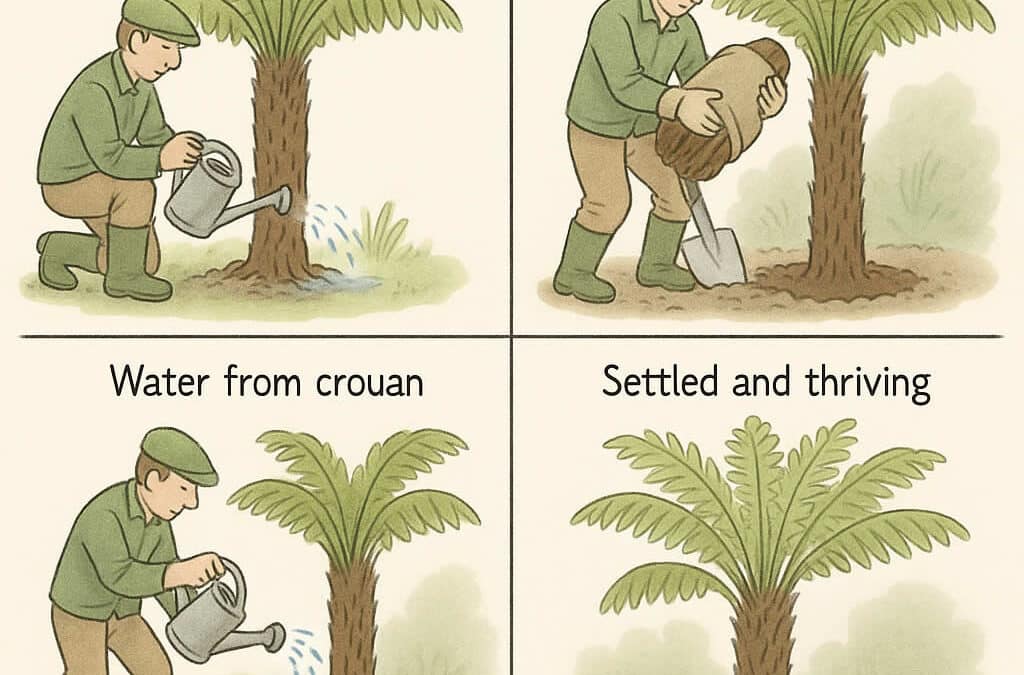
Fill the hole halfway with soil and water thoroughly to remove air pockets. Once the water drains, add the rest of the soil and firm it gently with your hands or boots. Avoid compacting it too much, as roots need oxygen. Finish with a deep watering.
Stake if Needed
If the tree is tall or in an exposed spot, use one or two stakes and soft ties to secure it. The tree should still move slightly in the wind — this movement encourages stronger roots.
Aftercare and Monitoring
After moving a tree, it’s going to need extra attention for at least the first year. Keep the soil consistently moist but not soggy, especially through spring and summer. A deep soak once a week is better than frequent light watering, as it encourages deeper root growth.
Spread a layer of mulch around the base (but not touching the trunk) to help retain moisture and regulate soil temperature. Avoid using fertiliser straight away — the tree needs to focus on settling its roots before putting out new growth.
Watch for signs of stress such as wilting, browning leaves, or dieback. Some leaf loss is normal, but severe or prolonged decline might indicate root shock or poor drainage.
Once the tree has been in place for a year and has re-established itself, you can remove any stakes. If growth seems slow, a gentle feed in the second spring can help it recover.
When to Call in the Experts
If the tree is large, old, or close to structures or power lines, it’s safer to call a professional arborist. Tree moving specialists have access to mechanical tree spades, cranes, and proper lifting gear, reducing the risk of injury or damage.
Professionals can also assess whether the tree is a good candidate for relocation. Some species transplant well; others struggle. Experienced arborists can prune roots precisely and handle the move without tearing fine feeder roots — the ones most vital to survival.
They’ll also be insured, which means if something does go wrong, you’re covered. It’s often a worthwhile investment for mature or sentimental trees.
References / Further Reading
For more detailed guidance, see:
- The Royal Horticultural Society (RHS) advice on transplanting trees and shrubs
- The Arboricultural Association’s tree care and relocation guidelines
- Local council information on Tree Preservation Orders (TPOs) and conservation rules
Closing / Encouragement
Moving a tree might seem daunting, but with patience and preparation, it’s perfectly achievable. Whether you’re saving a beloved tree from being lost to building work or giving it more space to grow, careful planning makes all the difference.
Treat it gently, water it well, and give it time to adjust. It may take a year or two before it feels fully settled, but when it starts to thrive in its new spot, you’ll know the effort was worth it.