Bonsai don’t stay small because they’re a special species. They stay small because you grow them in a controlled way. You let them grow, then you bring them back. That’s the whole rhythm. Bonsai Empire describe it as a mix of cultivation (how you start the tree), training (how you shape it), and daily care (how you keep it alive in a tiny pot).
Where Bonsai Begin
You can start bonsai from seed, from cuttings, from cheap nursery stock, or from trees already part-trained. However you start, the idea is the same: get a healthy tree growing first, then slowly reduce and refine. Young material grows faster, so it’s perfect for learning. Older/collected material gives you instant character but needs more careful work.
Growing in a Small Pot
Bonsai are grown in shallow containers so you can control roots and water. Less soil means the tree can’t get huge, and you can repot every couple of years to refresh the mix and trim the roots. That’s not just tidying – root pruning keeps the tree compact and lets it push fresh growth every spring. Without repotting, the soil clogs and the tree weakens.
Grow, Then Cut Back
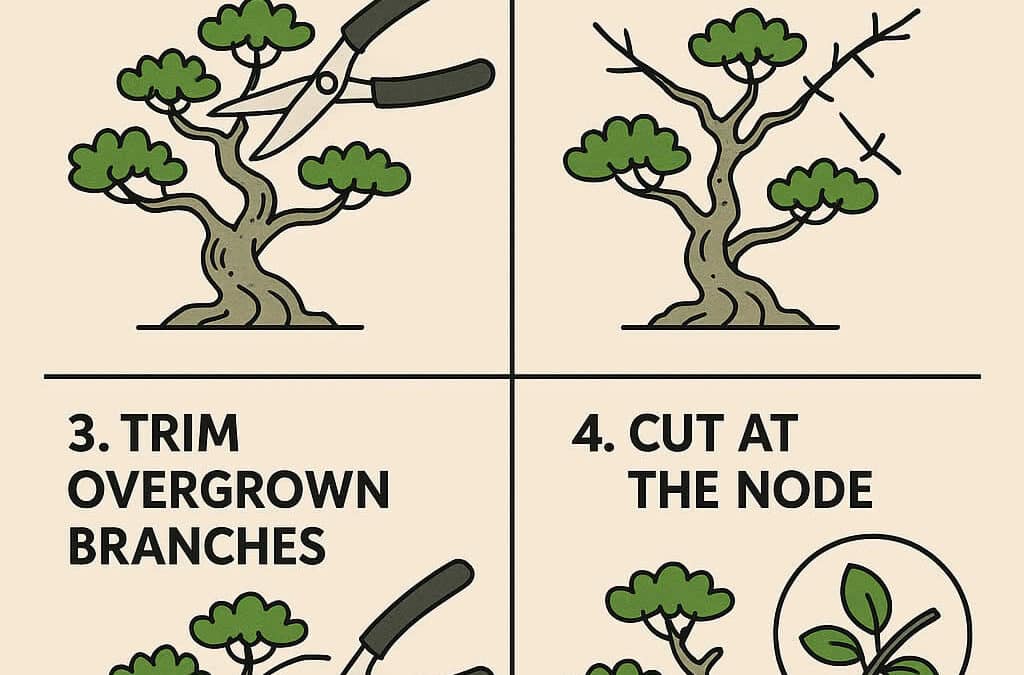
This is the part most beginners miss. You don’t keep cutting all the time. You let a branch run to thicken, then you prune it back to the length and direction you want. That’s how you get taper and short internodes. If you need a simple, step-by-step on that stage, point readers to your guide on how to prune a bonsai tree. That’s the real “I’ve let it grow, now I’m bringing it back” moment.
Water and Fertiliser Drive Growth
Because the pot is small, watering is basically part of the growing method. You water when the top starts to dry, always thoroughly, then let it drain. That steady moisture lets the tree respond to pruning with new buds. Light, regular fertilising through the growing season keeps the energy up without making the growth coarse.
Directing New Growth With Wiring
Pruning tells the tree what not to keep; wiring tells it where to put the next growth. You wrap the branch, bend it into the line you want, then let it grow in that position. Check wires often because as the branch thickens, the wire can bite. Done slowly, this is how you build a natural-looking structure.
Seasons Shape How You Grow
Most temperate species wake up in spring, which is why spring is the classic time for repotting and bigger cuts – the tree can heal. Summer is for maintenance pruning. Autumn is for slowing down and protecting. Winter is rest. Growing bonsai is really just working with that cycle every year.
Indoor vs Outdoor Growth
Outdoor species still want to live outdoors – light, air, and a winter rest. Indoor/suitable subtropical species can cope with a bright windowsill. If you grow a tree in the wrong environment, it won’t put out the growth you need to style it. So matching the species to the spot is part of “how it’s grown”.
The Growth Loop
- Let the tree extend so it stays strong.
- Prune it back into the design.
- Wire/rewire to set future growth.
- Repot when roots fill the pot.
- Protect in bad weather.
- Repeat next year.
That’s it. Bonsai aren’t born small. They’re grown small – slowly, on purpose, in cycles.
Tree Surgeon Handsworth – Tree Surgeon Bloxwich – Tree Surgeon Lawns Wood