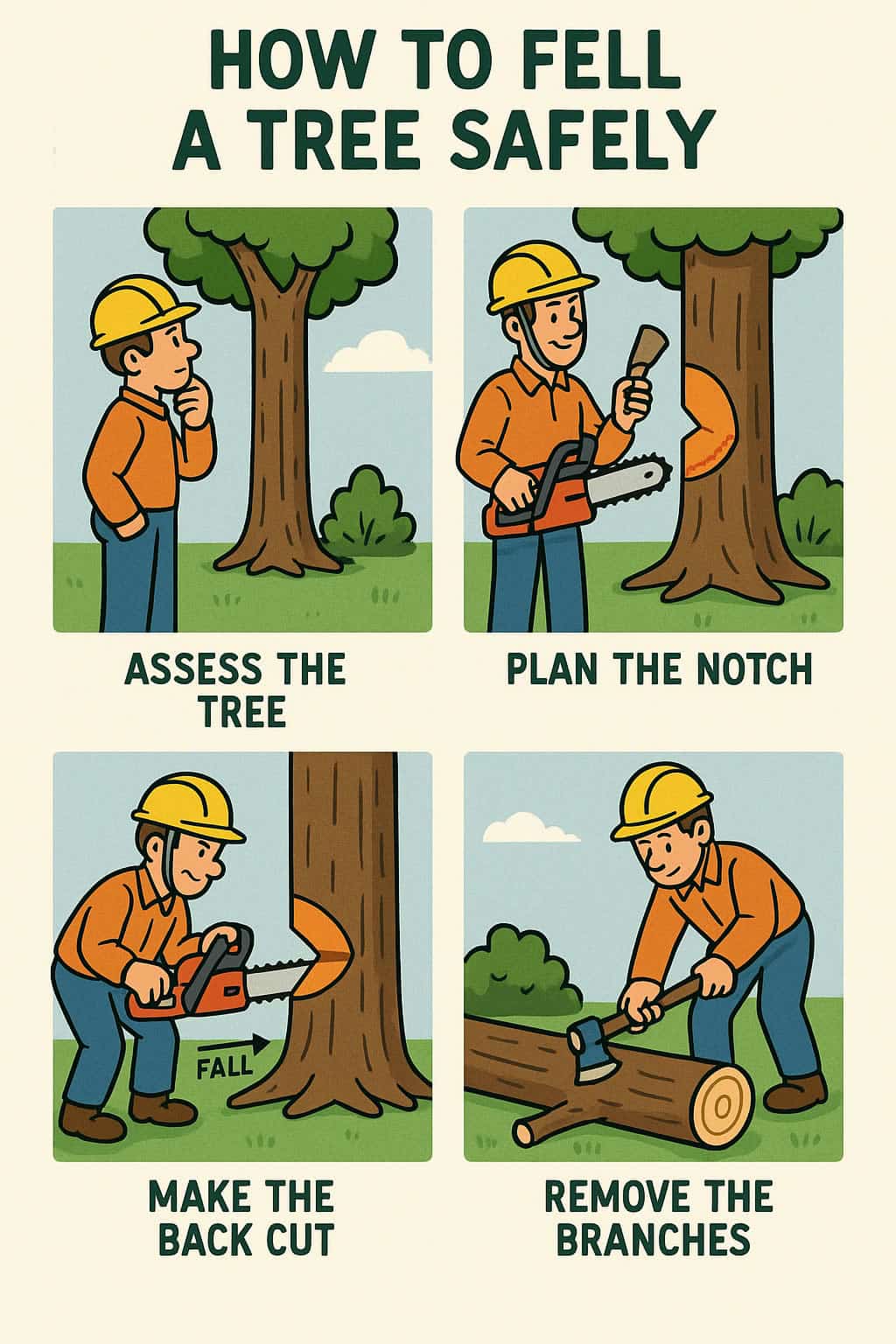
Felling a tree isn’t something you should take lightly. It can be dangerous if you don’t prepare properly, and even a small mistake could cause serious injury or damage. At the same time, there are plenty of situations where taking a tree down is the right thing to do – whether it’s diseased, unstable, or simply in the wrong place. If you’re thinking about tackling this job yourself, the most important thing is knowing how to do it safely from start to finish.
This guide will walk you through the whole process, step by step. We’ll look at when a tree really does need removing, how to plan properly, the safest techniques to use, and what to do once the tree is finally down.
Why and When to Fell a Tree
Signs a Tree Needs Removal
Not every tree should come down, so the first step is working out whether felling is necessary. Common signs include trees that are dead or dying, with bare branches, peeling bark, or large sections of rot. If a tree is leaning heavily, that’s often a sign of instability, and damaged roots can make it dangerous too. Storm damage, split trunks, or hollow areas are other clear warnings. Sometimes trees interfere with buildings, drains, or driveways, which may also mean removal is the best option.
Risks of Waiting Too Long
It’s tempting to leave a tree alone and hope for the best, but waiting too long can make the situation worse. Weak branches could drop on people, cars, or rooftops, and an unstable tree can topple in bad weather. Delaying doesn’t just increase the safety risk; it can also make removal harder and more expensive if the tree gets worse. Acting quickly is often safer and more practical.
Legal & Environmental Considerations
Before you pick up a saw, it’s vital to check whether the tree is protected. Some trees fall under preservation orders, and cutting them down without permission could land you with a hefty fine. Councils may also have rules about felling during nesting season, to protect birds and wildlife. Always look into the local regulations first. On the environmental side, consider replanting once a tree is gone. It helps replace what’s been lost and keeps your garden or local area green.
Preparation & Safety Planning
Assessing the Tree & Surroundings
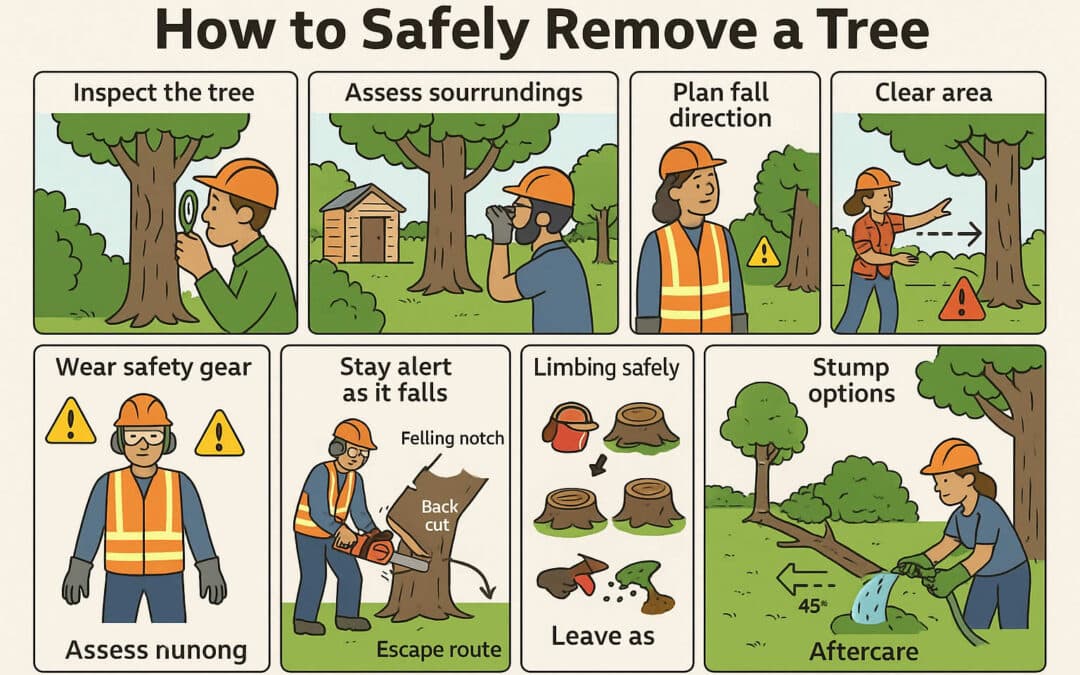
Once you’ve decided the tree needs to come down, you need to plan the job carefully. Start by looking at the height and shape of the tree. Work out which way it leans naturally, and check what’s nearby. Are there sheds, fences, or powerlines within reach? Think about how the tree might fall and whether there’s enough clear space. If you’re dealing with a large tree or one close to buildings, you might want to get a professional in.
Clearing the Fall Zone & Escape Routes
A safe fall zone is essential. As a rough rule, you’ll need a clear area that’s at least twice the height of the tree. Clear away anything within that zone – garden furniture, tools, or vehicles. You should also plan two escape routes at about a 45-degree angle away from the direction of fall. That way, if the tree starts to move unexpectedly, you’ll have a clear path to get away quickly.
Choosing the Right Equipment & PPE
Having the proper tools and protective gear makes all the difference. At minimum, you’ll need a reliable chainsaw, felling wedges, and possibly ropes or pulleys for bigger jobs. Just as important is the safety kit: a helmet with visor or goggles, ear defenders, gloves, boots with good grip, and chainsaw trousers to protect your legs. These aren’t optional extras – they’re what keep you safe.
Felling Techniques & Execution
Face Notch & Back Cut Methods
The most common way to fell a tree safely is by using a notch and back cut. Start with the notch: make a cut on the side of the tree facing the direction you want it to fall. This should be about a third of the way into the trunk. Then make a back cut on the opposite side, slightly higher than the bottom of the notch. This method helps guide the tree down in a controlled way. Always keep a close eye on the tree as you cut, and be ready to move once it starts leaning.
Using Ropes, Pulleys, and Wedges
Sometimes you’ll need extra tools to control the fall. Felling wedges can stop the saw from getting trapped in the cut and also help push the tree in the right direction. Ropes and pulleys are especially useful if you’re working in a garden with limited space. They give you more control and help prevent the tree going the wrong way.
Controlled Directional / Sectional Felling
Not all trees can be dropped in one go. If there are buildings or obstacles nearby, sectional felling is often the safer choice. This means climbing the tree and cutting it down in smaller pieces, starting with the branches. It takes longer but avoids the risk of a whole trunk crashing onto a roof or fence. For bigger jobs like this, professional help is strongly recommended, but it’s good to understand the approach.
After the Fall: Cleanup & Follow-Up
Limbing, Bucking & Stump Removal
Once the tree is on the ground, the work isn’t finished. Start with limbing – removing all the branches from the trunk. Then move on to bucking, which means cutting the trunk into manageable sections. What’s left is the stump, and you have options there. You can grind it down, treat it with eco-plugs, or leave it as a natural feature. Just be aware that stumps can attract pests if left untreated.
Wood Disposal, Recycling & Replanting
Dealing with the wood responsibly is important. Smaller branches can be chipped for mulch, while larger logs might be cut for firewood. Some local councils collect garden waste, or you could hire a chipper if there’s a lot to get through. Don’t forget the environmental side: planting a new tree is a great way to balance out the one you’ve lost.
Inspecting for Damage & Learning from the Job
Finally, check the area for any damage caused during felling. Look for cracks in paths, broken fences, or marks on nearby structures. Fixing small problems early is always better than waiting. It’s also worth reflecting on how the job went – what went smoothly, what felt risky, and what you’d do differently next time. That way, if you ever need to fell another tree, you’ll be even better prepared.
Final Thoughts
Felling a tree safely is all about planning, patience, and the right equipment. By taking the time to assess the risks, clearing a safe space, and using proper techniques, you reduce the chance of anything going wrong. While smaller trees can sometimes be handled by a careful DIY approach, larger or awkward ones are usually best left to professionals.
If you’re ever unsure, bring in a qualified tree surgeon. It’s not just about convenience – it’s about protecting yourself, others, and your property. And remember, whenever a tree comes down, planting a new one helps keep your garden and the wider environment thriving.
Tree Surgeon Woodcross – Tree Cutting Wolverhampton – Tree Surgeon Brownhills