If you’ve never felled a tree before, it can feel a bit daunting. Using a chainsaw is powerful but dangerous work, and getting the job done safely is all about preparation, planning, and technique. With the right approach, you can take down a tree in a controlled way, reduce risks, and make sure you leave the site tidy afterwards. This guide takes you step by step through the process, from assessing the tree to clearing up once it’s on the ground.
Preparation & Planning
Before you even pull the starter cord on your chainsaw, you need to plan. Tree felling is one of those jobs where rushing can cause accidents. The more carefully you prepare, the smoother the task will go.
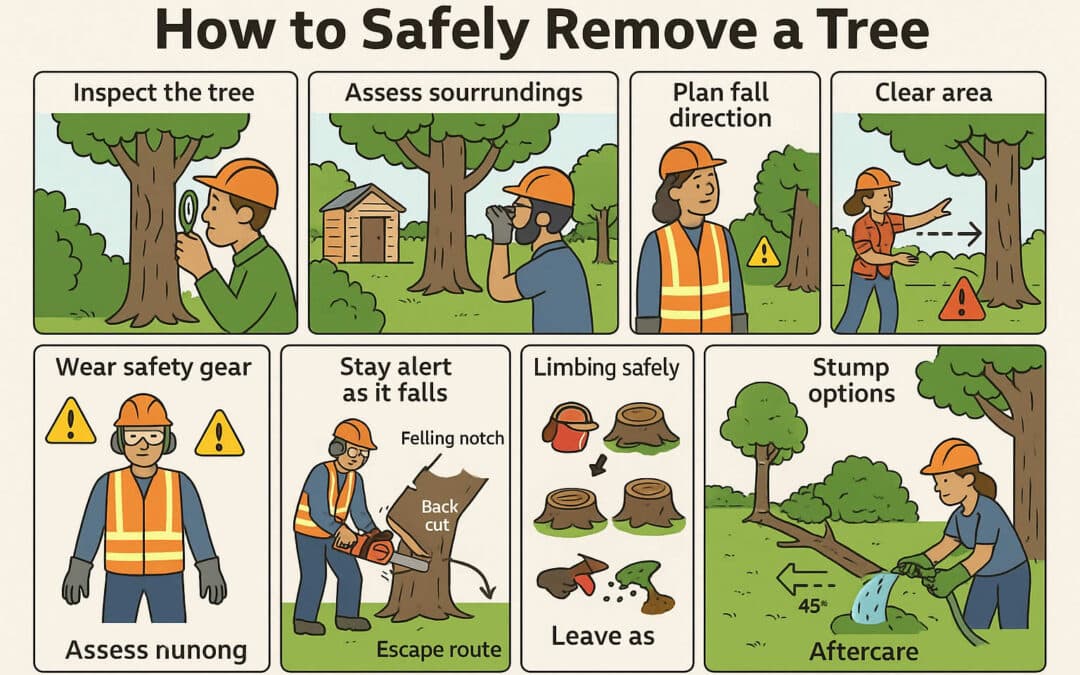
Start by walking around the tree. Look at the lean, the crown, and any signs of decay. Think about where you want the tree to fall and what’s in its way. If there are buildings, fences, or power lines nearby, you may need to rethink your approach or call in a professional.
Wearing the right protective clothing is also essential. Chainsaw trousers, gloves, helmet with ear defenders and visor, and steel-toe boots are the basics. A harness, wedges, and a felling lever are useful to have on hand too.
Tree & Site Assessment
- Work out the height of the tree and check the area where it’s likely to land
- Identify weak points like cracks, dead branches, or rot at the base
- Think about wind direction — a strong gust can change the way the tree falls
Hazard Identification & Risk Assessment
- Look for overhead hazards, such as dead limbs or neighbouring trees that could get caught
- Check the ground under your feet. Slopes, wet grass, or uneven soil make working unstable
- Make sure nobody else is in the fall zone, and set up a safety perimeter if possible
Equipment & PPE Checks
- Inspect your chainsaw: the chain should be sharp, the tension correct, and the bar oil full
- Test the chain brake, throttle lock, and stop switch
- Put on all your PPE before you start cutting
Planning might seem tedious, but it’s what separates safe felling from dangerous guesswork.
Notch & Back-Cut Methodology
The way you cut determines how the tree falls. You don’t just slice through and hope for the best. Instead, you control the direction with a notch cut, and then finish the job with a back cut that allows the tree to hinge and fall in a planned way.
Choosing the Right Notch (Open-Faced, Conventional, etc.)
- The open-faced notch is often recommended for less experienced cutters because it gives you more control and allows the tree to fall further before the hinge breaks
- The conventional notch is common but doesn’t give quite as much margin for error
- The Humboldt notch is more often used in forestry and downhill felling because it maximises usable timber
Whichever notch you use, accuracy is the key.
Cutting the Undercut / Notch
- Start with the bottom cut: make a horizontal slice about one-third into the trunk
- Follow with the angled top cut, coming down to meet the first cut
- Remove the wedge of wood cleanly, leaving a notch that opens toward your planned fall direction
This notch guides the tree and gives you a hinge point.
Executing the Back Cut & Managing the Hinge
- Move to the opposite side of the trunk
- Make the back cut slightly higher than the bottom of the notch — this creates the hinge
- As you cut, leave enough uncut wood between the notch and back cut. That hinge controls the fall
- Insert a wedge if the tree is leaning back or resisting the cut
Patience is important here. Don’t cut through the hinge, or you’ll lose control of the tree.
Execution & Escape
Once you’ve made your cuts, the tree is ready to move. This is when things can get unpredictable, so you need to stay alert and be ready to retreat.
Initiating the Fall & Using Wedges / Levers
- If the tree doesn’t start to move on its own, tap in a felling wedge
- Use a felling lever for extra force if needed
- Keep the pressure steady until you see the tree commit to the fall
Safe Retreat / Escape Routes
- Before you even start cutting, plan two escape paths at 45° angles away from the fall direction
- Once the tree begins to move, shut off or release the saw and retreat quickly along one of the paths
- Keep your eyes on the tree as it falls — never turn your back until it’s on the ground
Dealing with Trees That Don’t Fall / Hung Cuts
Sometimes a tree gets stuck in another or doesn’t fall completely.
- Stop cutting immediately
- Use wedges, a lever, or even a rope pull to free it safely
- Never cut directly under a lodged tree — that’s one of the most dangerous situations in felling
Execution is all about discipline. Resist the urge to improvise if something doesn’t go to plan.
Aftercare & Site Clean-Up
Once the tree is down, the work isn’t over. Limbing, bucking, and clearing debris safely takes just as much care as the felling itself.
Limbing, Bucking & Clearing Debris
- Limbing means removing the branches. Work from the base upward, standing on the opposite side of the trunk from the limb you’re cutting
- Bucking is cutting the trunk into manageable lengths. Make sure the log is supported so your saw doesn’t pinch
- Keep the site organised by stacking wood and clearing branches as you go
Checking for Damage, Splinters & Hazards
- Inspect the felled tree for tension wood — logs under pressure can spring out dangerously when cut
- Watch for splinters or kickback zones when you slice into larger sections
- Clear trip hazards and broken branches from the ground
Equipment Maintenance & Safety Check Post-Job
- Clean the chainsaw, sharpen the chain, and refill oil and fuel
- Inspect your PPE for damage and replace anything worn
- Store equipment properly so it’s ready for the next job
Tidying up keeps the site safe and prolongs the life of your tools.
Final Thoughts
Felling a tree with a chainsaw is not something you should rush or take lightly. It’s skilled work that demands preparation, concentration, and respect for the power of your equipment. By assessing the tree, planning your cuts, controlling the fall, and working safely throughout, you can take down a tree in a controlled way and avoid unnecessary risks.
Remember, if a tree is large, near property, or in a risky position, there’s no harm in calling in a qualified tree surgeon. Safety always comes first.
Tree Surgeon Old Perton – Tree Pruning Wolverhampton – Tree Surgeon Blakenhall