There’s nothing easy about deciding to kill a tree. Whether it’s pushing up through your patio, threatening your foundation, or sending roots into your drainage system, it’s a slow, messy problem—and if you’re here, chances are you’ve already tried pruning, and maybe even poison, with little effect. One method people often turn to is salt. But it’s not as straightforward—or safe—as it sounds. Let’s look at how salt affects a tree, what happens when you use it, how to do it if you really must, and whether there are better ways to deal with an unwanted tree.
What happens when you put salt on a tree?
Salt disrupts the natural water balance in the soil. Trees depend on absorbing water through their roots, but when salt is present in high concentrations, it pulls water away from the roots instead of letting them take it in. This process is called osmotic stress, and over time it causes the tree to dehydrate. Even if the tree seems fine at first, the internal damage begins almost immediately.
Salt can also interfere with nutrient uptake. Essential minerals like potassium, magnesium and calcium can’t be absorbed properly when sodium levels are high. That leads to deficiencies, slowed growth, yellowing leaves and eventually root dieback.
And if you’re thinking about pouring salt directly onto the ground, remember—soil is more than just dirt. It’s alive, full of microbes and beneficial organisms that trees depend on. Salt kills them off too, leaving the soil lifeless and compacted.
Why would someone want to kill a tree with salt?
This isn’t about spite or laziness. It’s usually frustration that gets people looking for this solution. You might have:
- A tree pushing up paving slabs or cracking walls.
- A fast-growing species dropping leaves or fruit everywhere.
- Roots invading drains or lifting up your drive.
- A tree blocking sunlight or ruining your garden layout.
- No funds to pay for a professional removal service.
- A neighbour’s tree encroaching on your boundary, but no agreement in place.
Salt feels like a secret weapon. It’s cheap. It’s available. And you don’t need tools or permission. But that’s exactly why it’s risky.
Is it legal to kill a tree with salt?
This is where you need to stop and check—seriously.
If the tree isn’t on your property, it’s not your decision. Even if roots or branches cross into your garden, the law still protects the rest of that tree. You can trim branches and roots back to the boundary, yes—but you mustn’t cause damage that might kill the tree. That includes poisoning it with salt.
Even if the tree is on your land, some are protected by Tree Preservation Orders (TPOs), especially in conservation areas or housing estates. You need permission from your local council before removing, damaging or even pruning these trees. Failing to follow the rules can lead to fines in the thousands—and you’d still have to pay to replace the tree.
So before you pour anything into the ground, contact your local planning office. It’s not worth the risk.
How much salt does it take to kill a tree?
That depends on the size and species of the tree, as well as how you apply the salt. But we’re talking about significant quantities—not just a handful.
Roughly speaking, to kill a mature tree, you’d need several kilograms of salt—spread across the root zone and applied repeatedly over time. That means saturating the ground with a saltwater solution, or drilling into the trunk or roots and pouring salt inside.
You’re not just sprinkling table salt and watching the tree fall over. It’s a process, and it’s slow.
How do you apply salt to a tree?
If you’ve decided to go ahead (and you’ve checked that it’s legal), here’s how salt is normally used:
- Drill method – Drill holes around the base of the tree, sloping downward into the trunk. Fill each one with rock salt. Cover with wax or soil to slow the release. Some people top up with water to help dissolve it over time.
- Soil saturation – Mix a strong saline solution using rock salt or sea salt, and pour it into the soil above the tree’s roots. This is usually done over several days or weeks to avoid washing the salt away too quickly.
- Girdling and salting – Cut a ring around the bark (removing the outer layer to stop nutrient flow), and then apply salt to the exposed area. This increases stress and speeds up the tree’s decline.
But let’s be clear—none of these methods are clean. Salt seeps through soil and can travel far beyond where you intend it to go. You could damage nearby plants, lawns, hedges and even your own vegetable beds.
How long does it take for salt to kill a tree?
You’re not going to see results overnight. Killing a tree with salt is a slow process. Depending on the size, health and species, it might take several months to over a year before the tree completely dies.
First you’ll see leaf drop, maybe yellowing at the edges. Then limbs might stop producing new buds. Eventually the bark may start to peel or crack. But during that time, the roots will still be interacting with the soil—and salt will keep moving outward with water flow, affecting more than just the tree.
It’s also not a guaranteed success. Some trees are surprisingly resilient. You might weaken it or stunt it, only to have new growth appear months later.
What are the environmental risks of using salt on trees?
This is where things get serious.
Salt doesn’t just stay where you put it. When it rains, salt moves with water—and if you’re using high concentrations, it can quickly:
- Kill surrounding plants and grass.
- Pollute groundwater and nearby water sources.
- Damage paving, concrete and bricks.
- Disrupt beneficial soil organisms.
- Harm wildlife that depends on the soil or tree.
And once soil is salted, it can take years to recover. Some people try to flush the area with fresh water to dilute it, but that just spreads the problem.
If the tree is close to other plants you want to keep, or near a drainage system, a lawn or a flower bed, salt isn’t just an aggressive option—it’s reckless.
Are there safer alternatives to using salt to kill trees?
Absolutely—and most are more controlled, effective and respectful of the space around the tree.
Here are a few alternatives:
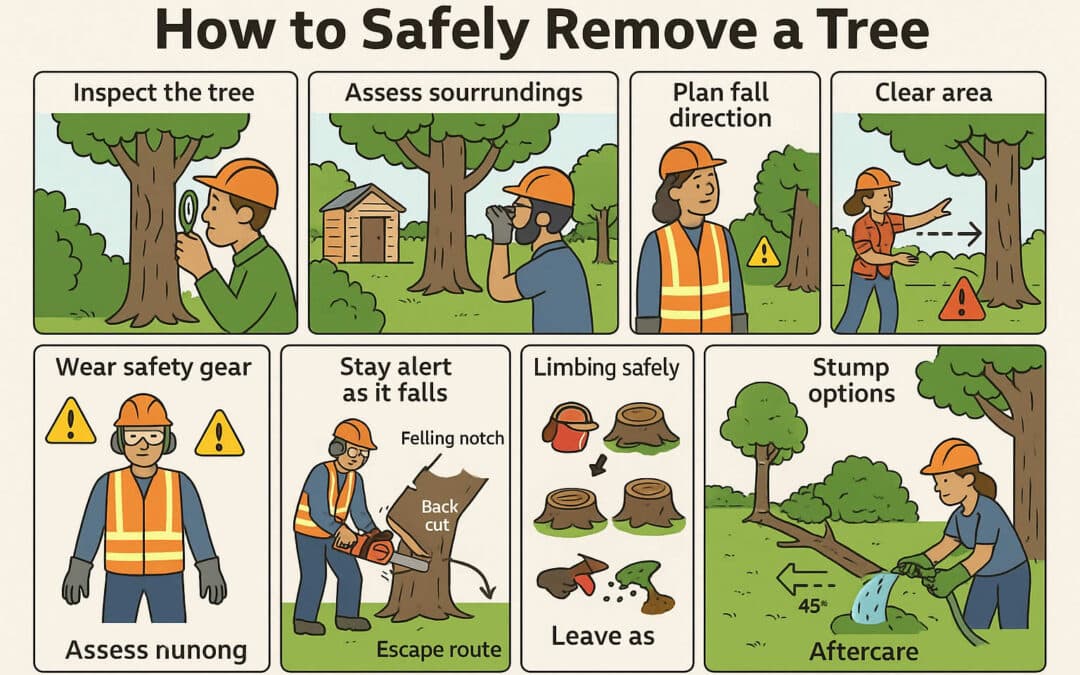
- Professional tree removal – This is the most direct and least environmentally damaging option. Tree surgeons can fell, grind and remove trees without damaging the surrounding area. Yes, it costs—but it’s fast, safe, and fully legal.
- Chemical herbicides – Some systemic herbicides (like glyphosate) can be applied carefully to cuts or drilled holes. They work from the inside out, targeting the tree specifically. Still risky, but more focused than salt.
- Root barriers – If it’s the roots causing trouble, installing a root barrier may stop further growth in your direction without killing the whole tree.
- Crown reduction or pruning – For light, space or shape issues, skilled pruning can transform a tree’s impact without killing it.
- Natural smothering – Cutting the tree down and covering the stump with tarps or plastic can deprive the roots of light and oxygen, slowly starving it.
The best choice depends on your end goal. If you’re trying to remove a tree entirely, stump grinding is ideal. If you’re just trying to stop further growth, selective treatment may be enough.
What are the signs that salt is affecting a tree?
If you’ve already used salt—or someone else has—you might start noticing these signs:
- Leaf scorch – Leaves turn brown at the tips or edges and may curl inward.
- Early leaf drop – The tree sheds leaves too early in the season.
- Slow or stunted growth – New shoots fail to appear, or grow shorter and weaker.
- Bark damage – Cracks or peeling, especially near the base.
- Discoloured soil – White crust or build-up around the roots could indicate salt accumulation.
- Wilting during rain – This is a big one. If the tree wilts even when the soil is moist, it’s likely unable to take up water—possibly due to salt stress.
If you see any of these signs, act quickly. Try flushing the soil with fresh water and consider applying gypsum to help neutralise the salt. It won’t undo everything, but it may limit the long-term damage.
Final thoughts: should you really kill a tree with salt?
Let’s step back for a moment. You’re not wrong to want a solution—especially if the tree’s causing damage, dropping leaves, or blocking your plans. But salt isn’t just a quick fix. It’s a harsh and unpredictable method that can spiral out of control.
It’s easy to underestimate how far salt spreads, or how long it lingers. And in a shared environment—where you’ve got neighbours, gardens, animals, even groundwater to consider—that’s a big risk.
If you’ve got the time and space to wait months, and the area around the tree doesn’t matter, salt might work. But in almost every case, there’s a better, cleaner, and more responsible way to handle it.
Talk to a professional. Ask your council. Look at chemical alternatives with controlled application. Or consider reshaping the tree instead of destroying it.
Once a tree is dead, it doesn’t come back. And neither does the soil it poisoned. So whatever you decide—make sure it’s a choice you can live with.
Tree Surgeon Church Hill – Tree Surgeon Shareshill – Commercial Tree Surgery