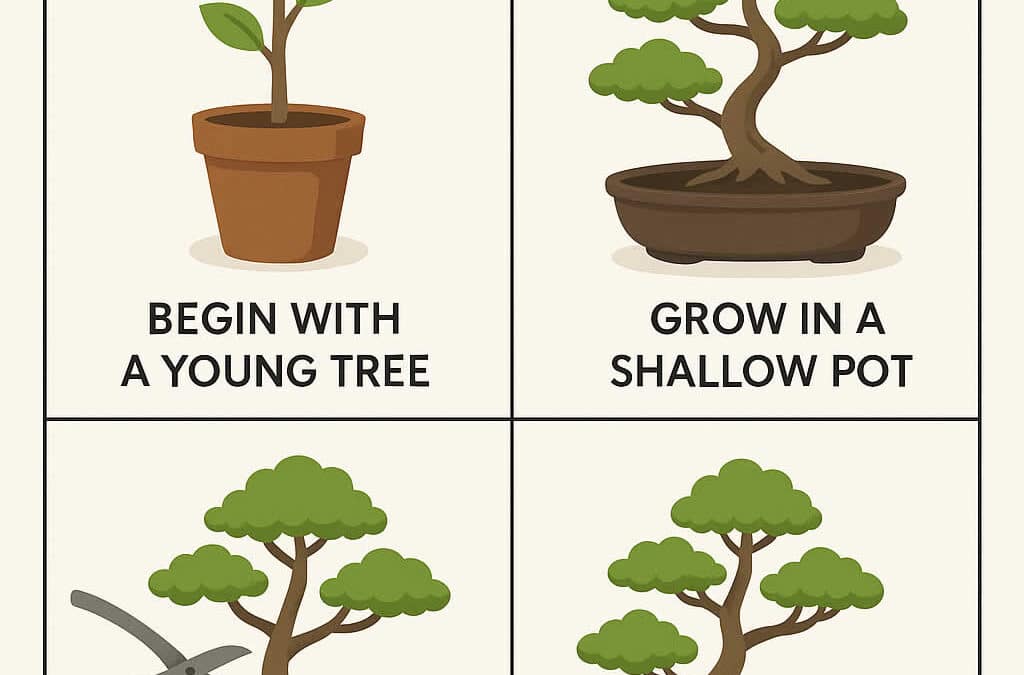
Did you know that a healthy bonsai tree can withstand the pruning of up to 1/3 of its foliage when learning how to trim a bonsai tree? This remarkable resilience is one reason these miniature trees continue to fascinate gardeners worldwide.
With over 420,000 people seeking information on bonsai care techniques, it’s clear that mastering how to prune a bonsai tree remains both an art and a science. Regular trimming is essential for maintaining the size, shape, and overall health of your bonsai. However, timing matters significantly – maintenance pruning typically works best during active growth periods from March to September, while structural pruning should be performed during dormancy from November to February.
For beginners wondering how to trim a bonsai tree for the first time, understanding the difference between maintenance and structural pruning is crucial. Most importantly, recognizing when to prune a bonsai can make all the difference in your tree’s development. Every two months is generally recommended, but you should also watch for discolored leaves as indicators.
In this guide, we’ll show you exactly how to shape a bonsai tree, addressing common challenges like uneven growth from light competition, and provide clear steps to help you master the delicate art of bonsai trimming.
Understanding Bonsai Growth and Pruning Types
To successfully trim a bonsai tree, you first need to understand how these miniature trees naturally grow and why proper pruning techniques matter.
How bonsai trees grow and compete for light
Bonsai trees, like their full-sized counterparts, grow with a principle called “apical dominance.” This means the main central stem grows more vigorously than side branches. This natural mechanism encourages trees to grow taller to prevent being shaded out by competing trees nearby.
When left unmanaged, trees direct most of their energy to the top and outer portions, causing two problems: inner and lower branches eventually die, while top branches grow disproportionately large. This creates an unbalanced appearance that works against bonsai esthetics.
Additionally, trees favor branches that grow vertically or receive greater sun exposure. If unchecked, certain parts outgrow others, eventually causing the tree to shed weaker branches that don’t contribute enough to the tree’s overall function.
What is maintenance pruning?
Maintenance pruning aims to maintain and refine your bonsai’s existing shape. Since trees naturally concentrate growth at the top and outer parts, regular trimming of these areas encourages inner growth, giving you control over the tree’s development.
This type of pruning should be performed regularly throughout the growing season (typically April to August). For deciduous trees like maples, privets, and elms, maintenance pruning is needed 2-3 times yearly, while conifers require less frequent attention – 1-2 times for larches and once for pines and junipers.
Through consistent maintenance pruning, you create finer branching and denser foliage pads, progressively improving your bonsai’s quality. A healthy tree can typically handle losing up to 1/3 of its foliage during maintenance pruning.
What is structural pruning?
Structural pruning (sometimes called “hard pruning”) is more radical and transformative. Unlike maintenance pruning, this technique gives virgin material its initial form, reduces trunk length, enhances taper, or removes unnecessary branches.
The purpose of structural pruning is to establish your bonsai’s basic shape or completely redesign it. This pruning type involves cutting larger branches and making fundamental decisions about which branches stay and which go – choices that permanently define how your tree will look.
Structural pruning is primarily performed at the beginning of a bonsai’s development or during late winter when the tree is dormant. For thicker branches, using concave cutters can reduce scarring, and applying cut paste helps protect wounds from infections while speeding healing.
Step-by-Step: How to Trim a Bonsai Tree for Beginners
Pruning requires a systematic approach to achieve the best results. Let’s dive into how to trim a bonsai tree with these fundamental steps that every beginner should master.
Remove weeds and dead branches
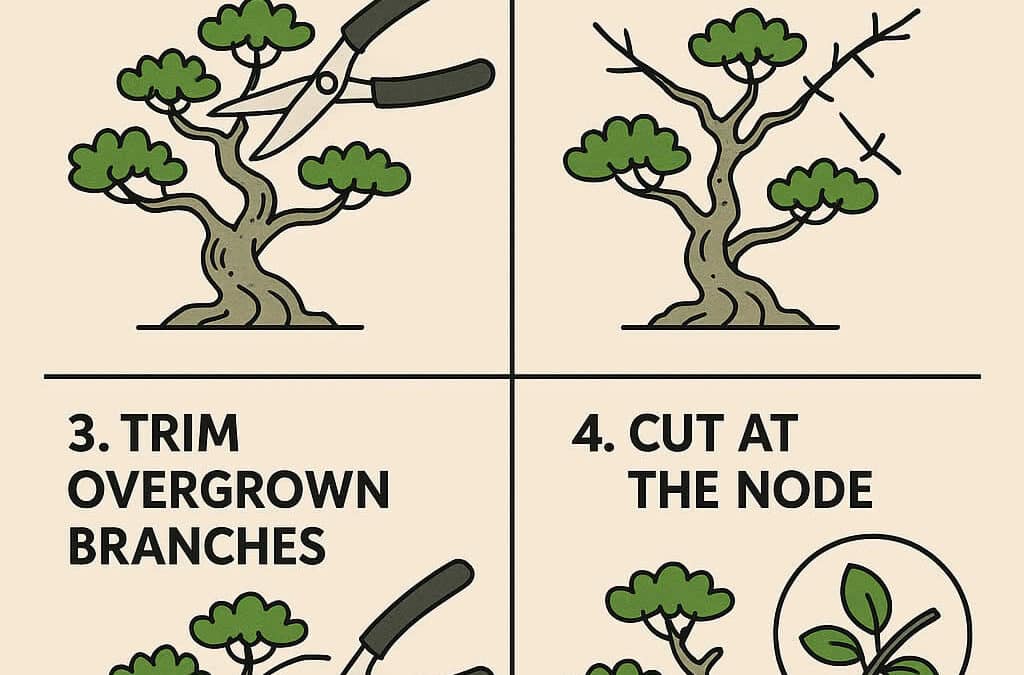
The first step in trimming your bonsai tree involves some basic housekeeping. Begin by carefully removing any weeds growing in your bonsai pot as these compete with your tree for nutrients and water. Next, identify and remove any dead branches, which can be recognized by their dry, brittle texture and lack of foliage. Dead branches not only detract from your bonsai’s appearance but can become entry points for disease if left unattended.
Trim crossed or broken branches
Although many bonsai enthusiasts follow the rule that crossing branches should always be removed, this isn’t always absolute. Nevertheless, for beginners learning how to trim a bonsai tree, removing crossing branches is a good practice as they create visual confusion and can damage each other through friction. Furthermore, winter pruning of deciduous bonsai trees should include removing branches growing directly upward or downward, as these disrupt the desired horizontal growth pattern.
Cut back twigs to 3-4 nodes
When trimming twigs, cut back to 3-4 nodes (the points where leaves emerge from the stem). This technique encourages back-budding and creates finer branching. For proper cutting, use sharp bonsai scissors and make your cuts at a slight angle just above a node facing the direction you want new growth to develop. This method of how to shape a bonsai tree helps create the dense, compact foliage that characterizes beautiful bonsai.
Thin out dense areas for light access
Pines and many other bonsai species are “apically dominant,” meaning they grow tall with sparse interiors. Consequently, thinning dense areas is crucial. Focus particularly on the top of the tree, which typically grows more vigorously and can shade out lower branches. When thinning:
- Remove large buds from branch tips
- Thin branches in busy areas of the tree
- Allow light to reach the center and lower portions
Remember that proper balance is essential—leave more foliage on lower branches and less on upper ones to equalize strength throughout the tree. A healthy bonsai can typically handle losing up to 1/3 of its foliage during pruning without stress.
How to Shape a Bonsai Tree with Precision
Shaping a bonsai transforms an ordinary plant into a living work of art. Unlike regular garden pruning, bonsai shaping requires precision and artistic vision to create miniature replicas of mature trees.
Identify the desired style or form
First, choose a style that complements your tree’s natural structure. Traditional bonsai styles include formal upright (straight trunk), informal upright (S-shaped trunk), cascade (trunk grows downward), semi-cascade, windswept, and literati (sparse branching). The choice isn’t arbitrary—each tree species naturally suits certain styles based on its growth patterns. For instance, pines work well for formal upright styles, whereas junipers excel in cascade forms.
Examine your pre-bonsai specimen and consider which branches to remove or modify based on your chosen style. Remember that styles serve as guidelines rather than rigid rules, allowing for personal interpretation and creativity.
Use pruning to guide branch direction
Structural pruning establishes your bonsai’s basic form, directing future growth. When removing branches, use concave cutters for thicker branches to minimize scarring. Subsequently, apply cut paste to protect wounds from infections and speed healing.
For directional growth, prune above buds facing your desired direction—cutting above an outward-facing bud encourages outward growth, whereas cutting above an inward-facing bud promotes inward growth.
When to use wiring for shaping
Wiring allows precise positioning of branches that pruning alone cannot achieve. Use wire approximately 1/3 the thickness of the branch being shaped. Most species can be wired year-round, though deciduous trees are easier to wire in late winter without leaves.
Apply wire at a 45-degree angle, spiraling evenly around the branch. For doubled branches of similar thickness, “double-wiring” provides better support. After wiring, gently bend branches using your thumbs on the inside of the curve to prevent splitting.
Balancing the canopy and lower growth
Maintaining proper balance between roots and canopy is crucial—typically, if you remove 10% of roots during repotting, removing 10% of the canopy helps maintain stability. Focus more foliage on lower branches and less on upper ones to equalize strength throughout the tree, counteracting the natural tendency for upper growth dominance.
Remember that balancing isn’t about perfect symmetry but rather creating visual harmony that mimics natural tree forms in miniature.
Aftercare and Seasonal Timing for Pruning
Proper timing and aftercare are just as crucial as the pruning technique itself. Knowing exactly when and how to care for your bonsai after trimming can make the difference between a thriving miniature tree and one that struggles to recover.
When to prune a bonsai: seasonal guide
Timing your bonsai pruning according to its natural cycle ensures minimal stress. In winter, trees enter dormancy due to cold temperatures—perfect for structural pruning on deciduous trees. Early spring marks growth resumption, ideal for light maintenance pruning. Summer brings major growth phases, followed by a brief dormancy during peak heat. Early autumn stabilizes growth, while late autumn prepares trees for winter dormancy.
Notably, your local climate affects these general guidelines. Rather than following a rigid schedule, observe your specific tree’s biological cycle for optimal pruning timing.
Watering and fertilizing after trimming
After pruning, watering requires special attention. I ensure the soil remains slightly moist but never saturated. During hot weather, monitor closely as high temperatures and wind can rapidly dry the substrate. If you notice leaf edges turning brown, water immediately to prevent permanent damage.
Regarding fertilization, I wait several weeks after significant root work before applying fertilizer. Many experts recommend applying slow-release fertilizer once yearly in April, though for faster growth, you might add a second application in July.
Using wound paste for large cuts
For larger cuts, wound paste aids healing by preventing moisture loss in the cambium layer. This allows callus to form more quickly under the paste, closing wounds faster than without protection. Apply paste only on significant cuts—small branch removal doesn’t require it.
Avoiding over-pruning and stress
A healthy bonsai can handle losing about 1/3 of its foliage. Removing more risks severe stress. I always avoid working on unhealthy trees as they cannot handle additional stress. Moreover, spacing major maintenance tasks (like structural pruning and repotting) by at least a year gives trees time to recover properly.
Following severe pruning, watch for signs of distress such as stunted growth or unusually small leaves. These indicate your tree needs time to recover before any further work.
Our Final Say!
Mastering how to trim a bonsai tree transforms an ordinary gardening hobby into a rewarding artistic pursuit. Throughout this guide, we’ve explored essential techniques for creating and maintaining these living sculptures. Timing, technique, and patience work together as the cornerstones of successful bonsai trimming.
Remember that bonsai trees follow natural growth patterns, directing energy upward and outward unless guided by your careful hand. Therefore, regular maintenance pruning becomes essential to maintain shape while encouraging inner growth. Structural pruning, though less frequent, establishes the foundational form that defines your tree’s character.
First-time trimmers should start conservatively, removing no more than one-third of foliage during any session. This cautious approach prevents stress while still achieving desired results. Seasonal timing matters tremendously—structural work during dormancy and maintenance during active growth ensures your tree responds positively to pruning efforts.
Above all, successful bonsai cultivation requires observation and response to your specific tree’s needs. Watch for signs of stress after pruning and adjust your care accordingly. The relationship between you and your bonsai develops over years, not days.
Lastly, patience rewards the dedicated bonsai enthusiast. Each small trim builds toward the vision you hold for your miniature tree. Though the art spans centuries of tradition, your personal journey with bonsai begins with these fundamental trimming techniques. All things considered, caring for these miniature trees connects us to nature in a uniquely intimate way—one careful cut at a time.
Tree Surgeon Darby End – Tree Surgeon Cheslyn Hay – Tree Surgeon Himley